
R.A.T.


Why R.A.T.?
C2M R.A.T. stands out as a transformative mathematics program that prepares students for the challenges of tomorrow. Moving away from traditional rote memorization, this program trains students to independently interpret complex information and reason their way through unfamiliar problems. By emphasizing active writing, presenting, and group discussions, R.A.T. transforms passive learners into analytical thinkers who can effectively apply mathematical concepts to real-world situations, making it the definitive choice for cultivating advanced reasoning abilities.
Core Point
Independent Thinking
When faced with an unfamiliar problem, students are encouraged to think it through independently, express their ideas in writing, present them to peers, and defend their logical approach in discussions.
Mathematical Reasoning
The program trains students to dynamically apply established mathematical concepts and knowledge to entirely new and unfamiliar problems, turning theoretical knowledge into practical problem-solving tools.
Integrated Thinking
It offers a highly integrated curriculum that covers the five major areas of primary mathematics alongside a dedicated sixth strand focused heavily on problem-solving strategies.
Real-World Application
Students learn to make sound, rational judgments in real-world mathematical situations while continuously sharpening their spatial awareness and strategic thinking skills.
Introduction
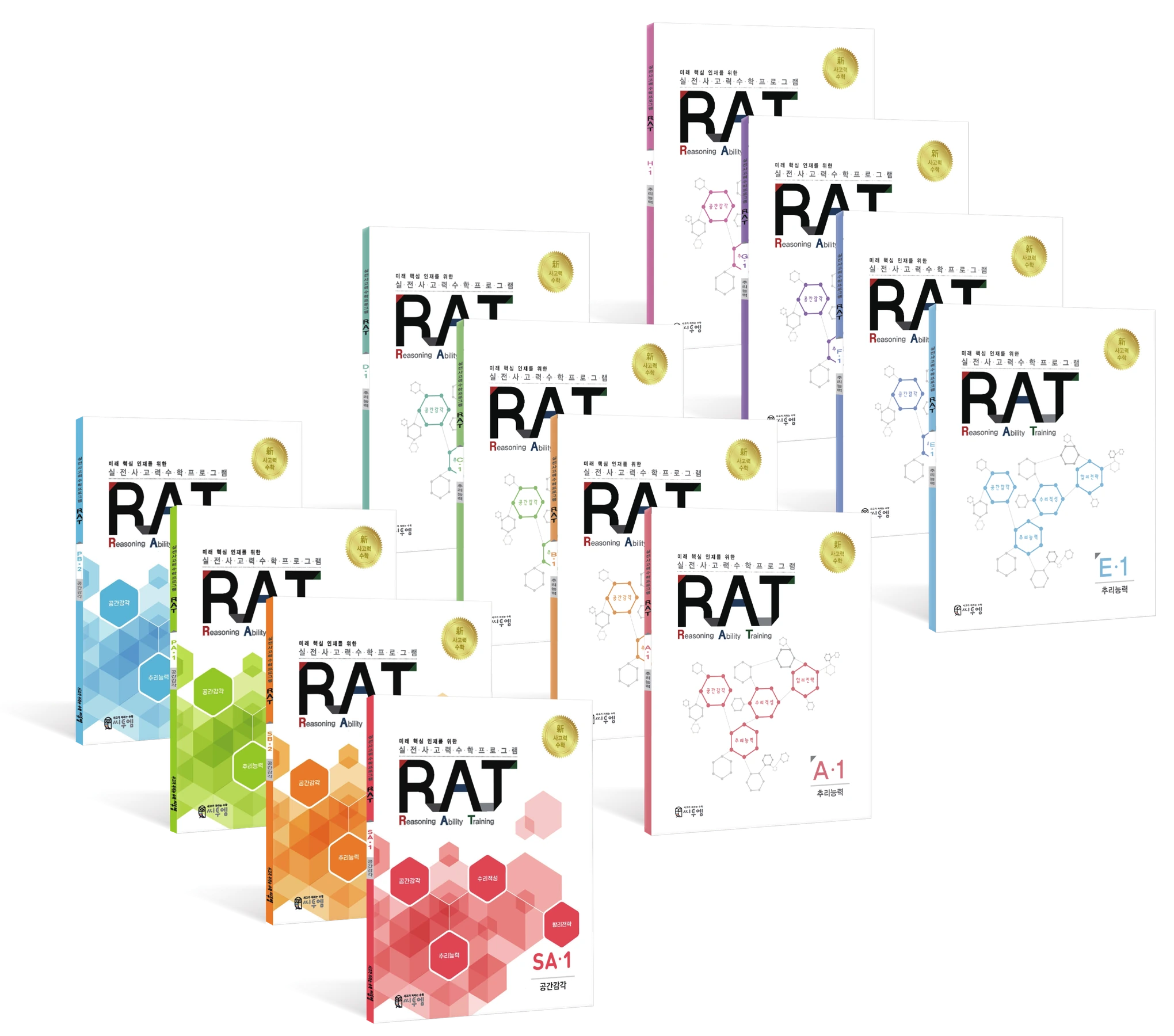
- Structure
- 4 domains · 10 levels · 64 core textbooks
- Target Age Group
- Recommended: Ages 5–10 · Extended use: up to Grade 6
- Format
- 4 units per book · 192 topics · 2,048 problem types
- Domains
- Logical Reasoning · Numerical Reasoning · Spatial Awareness · Strategic Thinking
Learning Flow
Start with an unfamiliar problem, then develop and share a reasoned solution.
5-Minute Focus
No matter how hard a problem looks, students give it five focused minutes of their own thinking, then revisit it after the class has solved it.
Writing
Students record their reasoning, or the pattern they noticed, in words or drawings.
Presenting
Students explain their solution, or describe the pattern they found, aloud or at the board.
Discussing
By comparing approaches, the class works together toward the best solution.
Creating Problems
Students become authors, writing new problems based on the types they have just mastered.
Program Materials & Supplementary Books

64 core textbooks, with Supplementary Books providing additional problems for Levels A–H.
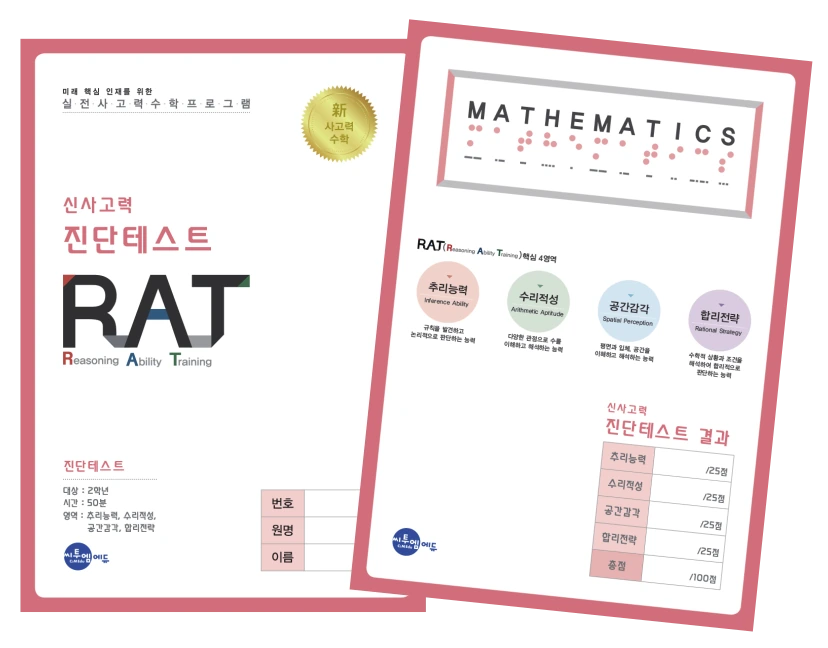
- Test Levels
- Eight levels (A–H)
- Questions & Duration
- 16 questions per level · 50-minute time limit
Test Analysis Report
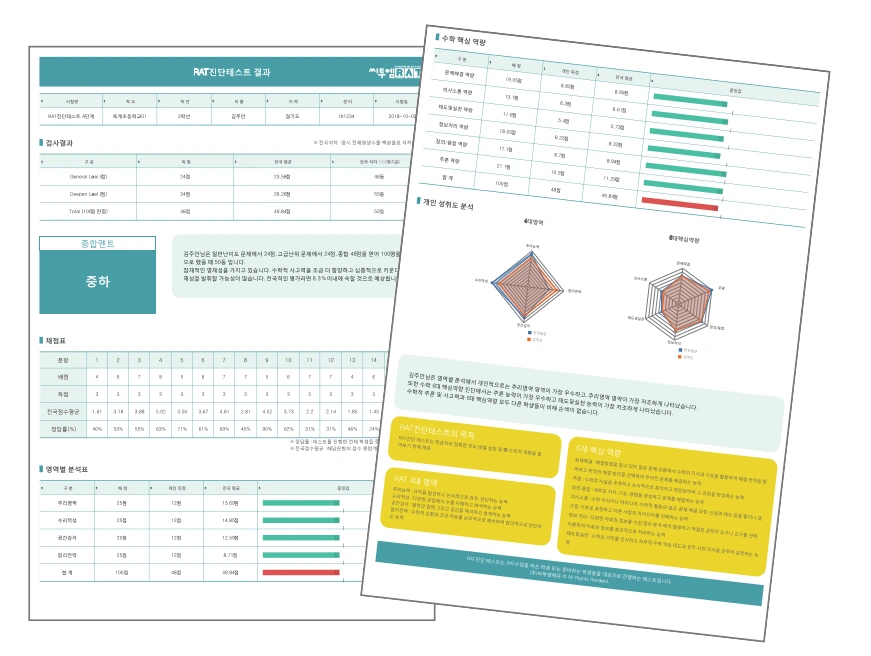
A difficulty-weighted analysis of results across the four R.A.T. domains and six core competencies.
From Assessment to Class Placement
Level-Based Diagnostic Test
Scoring
Online Score Entry
Analysis Report
Enrollment Consultation and Class Placement